Does RDmould Bucket Mold Design Reduce Material Waste Effectively
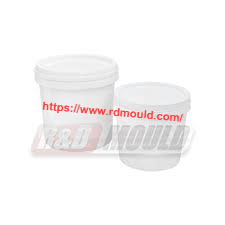
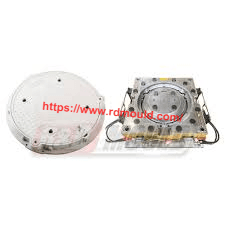
Every injection molding manager recognises that calculation. The raw material enters the hopper, travels through the barrel, and fills the cavity. Yet a portion never becomes the finished product. A Bucket mold that ignores material efficiency wastes resin with every cycle, not just once. RDmould, a manufacturer with over two decades of tooling experience, observes this loss across container production facilities worldwide. The question demands attention: how can mold design actively reduce the material that never reaches the customer? The gating system represents the first opportunity for material conservation. Standard three-plate molds produce a runner and sprue that solidify and get reground, consuming energy and degrading polymer properties. Hot runner systems eliminate this waste entirely, delivering molten resin directly to the cavity without forming a solid runner. For bucket production, the hot tip design requires precise thermal control around the gate area, as noted in the Paint Bucket Mould technical overview . A poorly designed hot tip creates flow hesitation that affects wall thickness distribution, forcing operators to increase shot weight to compensate. RDmould's engineering approach prioritises gate placement and tip sizing that balances fill with minimal material usage. Wall thickness uniformity directly influences material consumption. A Bucket mold with eccentric core positioning produces uneven wall sections, requiring extra material to ensure the thinnest point meets strength requirements. This problem appears frequently in paint bucket production, where core eccentricity causes the pail to go out of center . Precision machining of the core and cavity alignment prevents this uneven distribution, allowing the designer to specify the minimum wall thickness required for the application. The mold's guiding system, including leader pins and return pins, maintains alignment across thousands of cycles, preserving this dimensional accuracy. Cooling system design affects cycle time and, indirectly, material efficiency. Rapid cooling allows faster cycle times, but uneven cooling creates warpage that requires additional material to compensate for distortion. The cooling channel placement in the core, cavity, and slider areas determines how heat transfers from the molten plastic . RDmould recommends cooling lines positioned 15mm below the molding surface with diameters exceeding 12mm to ensure smooth water flow. This engineering choice maintains stable cavity temperatures, producing consistent shrinkage and eliminating the need for overpacking—a common practice that wastes material to compensate for variable cooling. Steel selection influences the mold's ability to maintain precise dimensions over its service life. A Bucket mold using 2738 steel achieves approximately one million shots with proper hardening, while 2344 steel extends that lifespan to over three million cycles . Longer mold life reduces the frequency of tool replacement, but the steel choice also affects thermal conductivity and wear resistance. BeCu inserts in high-heat areas improve heat transfer, reducing cycle time and associated energy consumption . RDmould's steel recommendations balance initial cost against long-term production efficiency, ensuring the mold maintains its dimensional accuracy without requiring oversized parts to compensate for wear. Cavitation decisions shape material usage across the entire production run. A single-cavity bucket mold produces one part per cycle, consuming material only for that part. Multiple cavities produce more parts per cycle but require a larger runner system, increasing waste. The cavity count should align with the annual production volume, balancing machine time against material efficiency. RDmould's design process includes production forecasting that optimises cavitation for each customer's specific output requirements. This tailored approach prevents the waste inherent in oversized molds used for small production runs. Ejector system design affects the part's final geometry and material requirements. Ejector pins that leave visible marks or cause distortion may require additional material thickness to maintain structural integrity. The stripper plate system, common in bucket molds, provides uniform ejection force across the part's circumference . This distributed force prevents localised deformation that would otherwise require extra material to compensate. The collapsible core mechanism, used for undercut features, must retract without damaging the part , maintaining dimensional accuracy and preventing scrap generation. Parting line design influences flash formation and subsequent trimming. A Bucket mold with proper steel match along the parting line produces minimal flash, reducing the material removed during finishing. Flash, though small per shot, accumulates substantial waste across large production volumes. The mold's locking mechanism and clamping force determine how effectively the two halves seal during injection. RDmould's precision machining ensures the parting line maintains its seal across temperature cycles, preventing flash that wastes material and requires secondary processing. Venting systems, though small, affect material efficiency through their impact on fill pressure. Inadequate venting causes trapped air that increases injection pressure, forcing operators to use higher packing pressures. This overpacking compresses the material beyond the required density, consuming additional resin without improving part properties. Proper vent placement at the end of the flow path allows air to escape, reducing the pressure needed for complete fill. RDmould's venting strategy positions vents strategically to ensure complete cavity fill at minimum packing pressure. Beryllium copper inserts in the core top and cavity bottom accelerate heat transfer in critical areas . This thermal management reduces the overall cycle time, allowing the mold to produce more parts per hour without increasing the shot size. Shorter cycle times reduce the material degradation that occurs when polymer remains in the barrel at elevated temperatures. This degradation can cause viscosity changes that require shot weight adjustments, often increasing material consumption. RDmould's thermal analysis identifies areas where BeCu inserts provide the greatest benefit, focusing on the gate area and thick sections where heat accumulation occurs. For manufacturers evaluating bucket production costs, the mold's material efficiency deserves as much attention as its cycle time. A mold that produces dimensionally consistent parts with minimal flash, balanced fill, and uniform wall thickness consumes the minimum material necessary for each shot. RDmould's design approach incorporates gating optimisation, cooling analysis, steel selection, and precision machining to achieve this efficiency. https://www.rdmould.com/ presents bucket molding solutions engineered for material conservation. Does your current bucket mold design account for every gram of resin it processes?