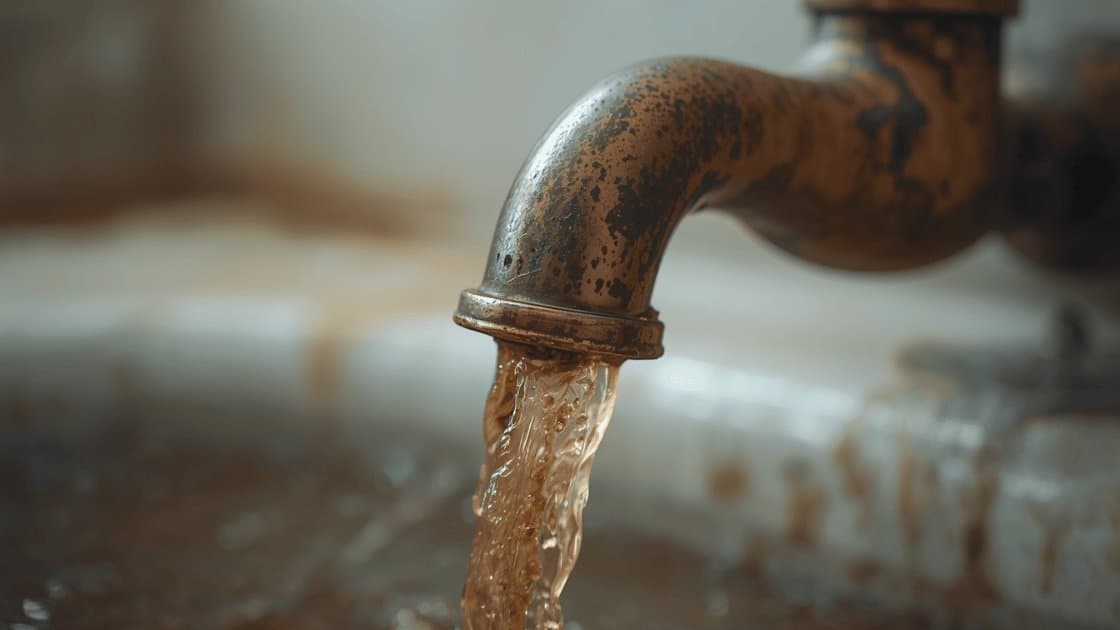
Why Your Tap Water Turned Brown, and Whether It's Safe to Use
Turning on the tap and seeing brown, yellow, or rusty water is alarming, and the first question is always the same: is it safe? In most cases the color comes from rust and sediment rather than anything toxic, and it often clears on its own. But brown water is still a signal worth understanding, because where it comes from tells you whether it is a passing nuisance or a sign your pipes need attention. Here is what causes it, how to tell the source, and what to do. What actually turns your water brown The color is almost always iron and sediment. Water picks up rust and mineral particles somewhere between the source and your faucet, and the more it picks up, the browner it looks. There are four common places that happens. Aging iron or galvanized pipes are the classic cause. As older metal plumbing corrodes from the inside, it sheds rust into the water flowing through it. A disturbed city water main is another, when the utility flushes hydrants, repairs a line, or a main breaks nearby, it stirs up sediment that has settled in the pipes and sends it to your taps. Your water heater is a third source, since sediment and rust build up in the tank over years and can tint your hot water. And recent plumbing work on your line can loosen deposits that then show up brown for a little while. How to tell where it is coming from You can narrow down the source with a few quick checks, and this matters because it decides who fixes it. Run both the hot and the cold. If only the hot water is brown, the problem is almost certainly your water heater. If both hot and cold are discolored at every faucet, the issue is upstream, either your main line or the city's supply. If it is just one faucet, suspect a corroded pipe or a clogged aerator at that fixture. And timing helps too: if it started right after city crews worked nearby or a hydrant was flushed, it is likely temporary sediment that will clear. Our full guide walks through diagnosing brown water from your faucet step by step. Is it safe to use? For most cases, brown water caused by rust and sediment is not a serious health hazard, iron in these amounts is more unappealing than dangerous. That said, you should not drink or cook with discolored water until it runs clear, and it is wise to skip laundry too, since rusty water can stain clothes. If the water smells bad, has an oily sheen, or the discoloration continues for more than a day, do not assume it is harmless, have your water tested and the cause investigated. When in doubt, use bottled or filtered water for drinking until you know the source. What to do first Start simple. Run your cold water from the tap nearest your main for fifteen to twenty minutes to see if it flushes clear, this clears out temporary sediment from city work or a stirred-up main. Check with a neighbor or your water utility; if it is happening across the neighborhood, it is the city's line and usually resolves on its own. If only your hot water is brown, draining and flushing your water heater often solves it. If cold water at multiple faucets stays brown after flushing, and your neighbors are fine, the problem is likely inside your own plumbing. When it is time to call a plumber Brown water becomes a plumbing issue, and yours to fix, when it is isolated to your home and does not clear with flushing. That usually points to corroding galvanized or iron pipes inside the house, and rusting pipes only get worse, eventually leaking or restricting flow. A plumber can inspect the lines, confirm whether corrosion is the cause, and advise on repiping the affected sections. If the culprit is an old water heater shedding rust from a failing tank, replacement is often the better long-term call than repeated flushing. The bottom line Brown tap water is usually rust and sediment, not poison, but it is a message about where your water has been. Check whether it is hot-only, all faucets, or one fixture to find the source, flush your cold line, and avoid drinking or doing laundry until it clears. If it keeps coming back and it is only your home, aging pipes or a failing water heater are the likely cause, and that is worth a plumber's look before a corroded line springs a leak. Nuflow DFW is a licensed Plano plumber (RMP# 46694) serving the Dallas-Fort Worth Metroplex, with 24/7 availability. If brown water keeps returning at your home, call (469) 701-0597 to have your lines and water heater checked.