Portfolio Monitoring for Smarter Risk Management and Early Risk Detection
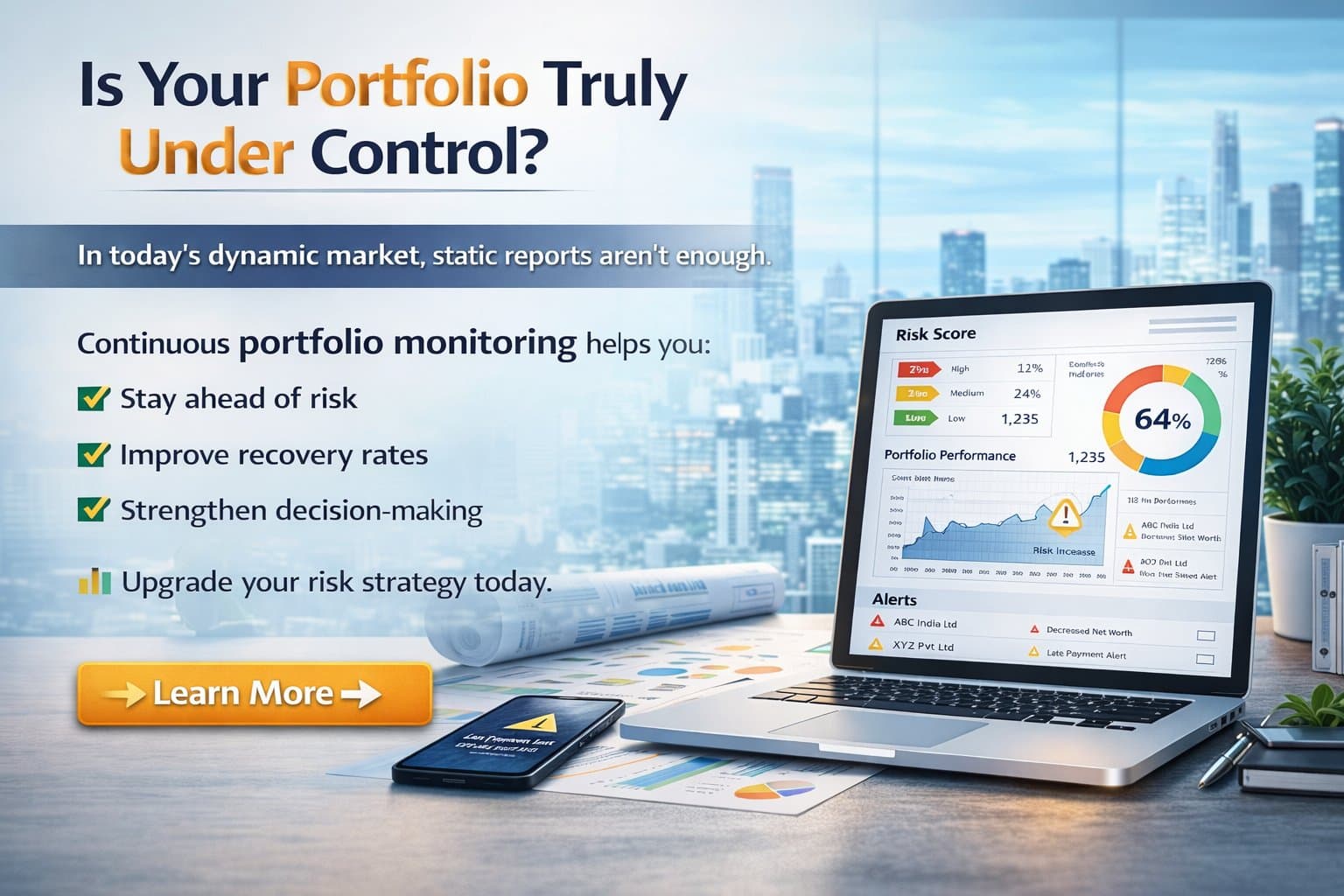
Lending and investment decisions do not end when a loan is approved or a business relationship begins. Financial conditions, ownership structures, compliance positions, and market circumstances can change over time. Without regular visibility into these changes, lenders and credit teams may discover emerging risks only after they have affected the portfolio. Portfolio Monitoring provides a structured approach to tracking businesses, borrowers, counterparties, and financial exposures after the initial assessment. By continuously reviewing financial, operational, legal, and business information, organizations can identify important changes and take action before risks become more difficult to manage. For banks, NBFCs, fintech companies, insurers, and corporate finance teams, effective portfolio monitoring supports stronger risk management and more informed decisions throughout the business relationship. What Is Portfolio Monitoring? Portfolio Monitoring is the ongoing process of tracking the financial health, business activity, compliance position, and risk indicators of companies or borrowers within a portfolio. Unlike a one-time credit assessment, portfolio monitoring focuses on what changes after onboarding or financing. Depending on the business requirement, teams may monitor: Financial performance Debt and repayment indicators Directors and ownership Corporate filings Litigation Compliance developments Business relationships Charges and liabilities Significant company events The objective is not simply to collect information. It is to identify meaningful changes that may require investigation, additional due diligence, or a change in the organization's risk response. Why Is Portfolio Monitoring Important? Risk Can Change After Approval A company that appeared financially stable during underwriting may experience declining revenue, rising liabilities, management changes, or legal disputes later. Regular monitoring helps credit teams identify these developments instead of relying on outdated onboarding information. Early Detection of Financial Stress Changes in financial performance can provide useful warning signals. A consistent decline in revenue, weakening profitability, increasing debt, or deterioration in working capital may warrant closer review. Better Credit Decisions Current business information gives credit teams stronger evidence when deciding whether to renew limits, increase exposure, restructure facilities, or conduct additional due diligence. Improved Portfolio Visibility Monitoring multiple borrowers manually can make it difficult to identify which companies require immediate attention. A centralized monitoring system can help teams prioritize accounts based on relevant risk indicators. Key Areas to Monitor Financial Performance Track changes in revenue, profitability, liabilities, assets, and other available financial indicators. Comparing current information with historical trends can provide more useful insight than reviewing a single reporting period. Ownership and Management Changes in directors, promoters, shareholders, or ownership relationships can affect the risk profile of a business. Significant management changes may also warrant additional verification. Legal and Litigation Risk New litigation, disputes, regulatory proceedings, or other legal developments may affect a company's financial position or business continuity. Corporate and Compliance Information Changes in corporate filings, statutory information, charges, or compliance-related indicators can provide important signals about the company's current position. Business Relationships Monitoring related companies, common directors, ownership linkages, and other business relationships can help organizations understand interconnected exposure within a portfolio. How Portfolio Monitoring Works A typical Portfolio Monitoring process begins by adding borrowers, customers, suppliers, or counterparties to a monitored portfolio. The system then collects relevant business and financial information from available data sources. New information is compared with previous records to identify significant changes. When a relevant event or risk indicator is detected, the system can generate an alert or flag the account for review. Credit or risk teams can then investigate the development and determine whether additional action is required. This approach allows organizations to move from periodic reviews toward a more continuous risk management process. Role of Technology in Portfolio Monitoring Technology has significantly improved the way organizations monitor large portfolios. Automated data collection reduces repetitive manual checks, while analytics can help identify unusual changes across multiple businesses. AI-powered monitoring can also help categorize risk indicators and prioritize accounts requiring human attention. Dashboards provide credit teams with a consolidated view of portfolio exposure, recent developments, and emerging warning signals. For organizations managing hundreds or thousands of companies, automation can make ongoing monitoring more practical and scalable. Company Information and Portfolio Risk Assessment Reliable company information is essential for effective portfolio monitoring. Credit teams need access to current information about a company's financial performance, directors, ownership structure, corporate filings, charges, litigation, compliance indicators, and business relationships. A centralized business intelligence platform such as Credhive can bring these data points together and help organizations track important changes across monitored companies. This provides credit and risk teams with a more complete view of counterparties and supports timely investigation when significant developments occur. Practical Example Consider an NBFC with a portfolio of 500 MSME borrowers. During initial underwriting, each borrower met the organization's credit criteria. Six months later, automated monitoring identifies that several borrowers have experienced significant changes. One company shows weakening financial performance, another has a new director, while another faces new litigation. Instead of waiting for the next scheduled review, the credit team can prioritize these accounts for investigation. The remaining borrowers can continue through the normal monitoring workflow. This approach helps allocate risk-team resources where they are most relevant. Best Practices for Portfolio Monitoring Define Relevant Risk Indicators Monitor information that directly relates to the organization's credit, financial, operational, or counterparty exposure. Establish Risk-Based Alerts Not every change requires immediate action. Set appropriate thresholds so teams can focus on material developments. Combine Historical and Current Data Comparing changes over time provides greater context than reviewing isolated events. Maintain Human Review Automation should support risk professionals rather than replace judgment in complex or high-risk cases. Monitor Continuously Regular monitoring reduces the possibility of relying on outdated company information during portfolio reviews. FAQs What is Portfolio Monitoring? Portfolio Monitoring is the ongoing tracking of borrowers, companies, counterparties, and other exposures to identify changes that may affect risk or financial performance. Why is Portfolio Monitoring important for lenders? It helps lenders identify emerging financial, legal, ownership, and compliance risks after the initial credit decision. What should be monitored in a credit portfolio? Key areas include financial performance, ownership, directors, litigation, corporate filings, compliance indicators, liabilities, and business relationships. Can Portfolio Monitoring be automated? Yes. Technology can automate data collection, change detection, alerts, reporting, and portfolio-level risk visibility. How does Portfolio Monitoring support early risk detection? By comparing current business information with historical data, monitoring systems can highlight material changes that may require investigation before they develop into larger credit problems. Conclusion Portfolio Monitoring is an important component of modern credit and risk management. Initial underwriting provides a view of a business at a particular point in time, while continuous monitoring helps organizations understand how that risk profile changes afterward. By combining financial analysis, company information, ownership intelligence, legal and compliance monitoring, and automated alerts, lenders and financial institutions can improve portfolio visibility and respond more effectively to emerging risks. A structured and technology-enabled approach allows organizations to manage growing portfolios while maintaining stronger control over credit and counterparty exposure. https://credhive.in/products/portfolio-monitoring