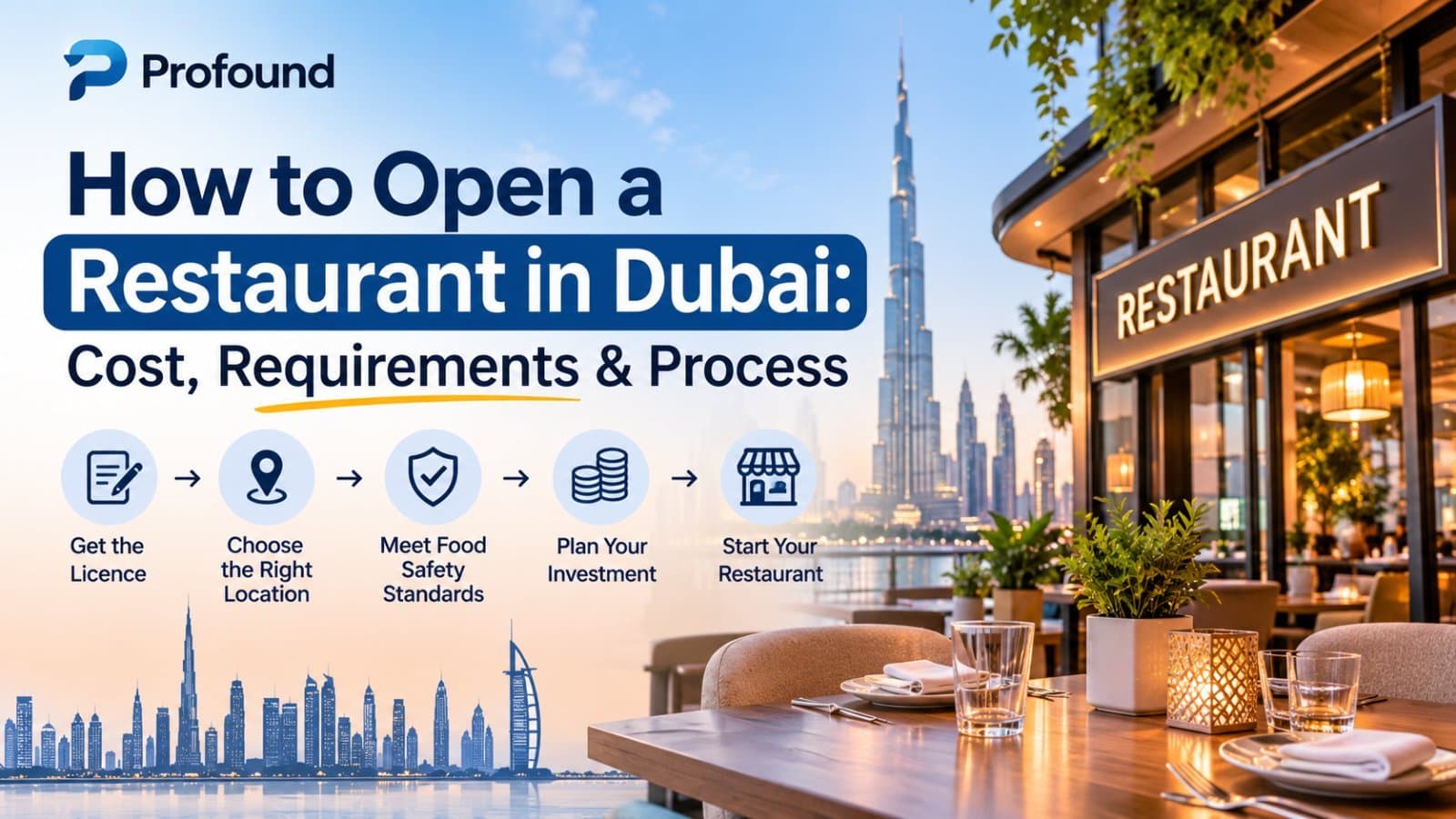
Opening a restaurant in Dubai can be an exciting opportunity for entrepreneurs who want to enter the food and hospitality industry. However, turning a restaurant idea into an operating business involves several important stages. Investors need to think about more than food and interior design. Market research, business licensing, location selection, financial planning, food safety and daily operations all play an important role. If you are considering starting a restaurant in Dubai, this practical roadmap will help you understand the major stages of preparation. Stage 1: Turn Your Restaurant Idea into a Business Concept Every successful restaurant starts with a clear concept. Think about the experience you want to provide and the customers you want to attract. Your idea could be a speciality café, family restaurant, casual dining outlet, premium restaurant or a delivery-focused food business. Before moving forward, define: Your restaurant's cuisine and menu direction Your target customer group Your expected pricing range Your unique selling proposition Your preferred service model A well-defined concept gives you a foundation for making decisions about location, investment, branding and operations. Stage 2: Research the Market Before Investing Market research helps you understand whether your restaurant concept has a realistic opportunity. Study the areas where you may want to establish your business. Observe existing restaurants, compare their menus and prices, and read customer reviews. Try to identify: What customers expect from restaurants in the area Which food categories are already well represented Where competitors may be falling short Whether your proposed pricing suits the local audience What could make your restaurant different Do not depend only on assumptions or personal preferences. Use research to support your investment decisions. Stage 3: Find a Suitable Restaurant Location The right location should match your restaurant concept and customer profile. For example, a neighbourhood café may need a different location strategy from a premium dining establishment or a quick-service restaurant. Evaluate these factors before selecting a property: Accessibility: Can customers reach the restaurant conveniently? Visibility: Is the premises easy to identify? Customer profile: Does the surrounding area match your target audience? Rental expenses: Can the expected business revenue support the rent? Premises suitability: Does the property support the required kitchen, storage, ventilation and seating arrangements? Always investigate the property's permitted use and applicable approval requirements before signing a lease. Stage 4: Understand the Licensing and Approval Process Business licensing is an essential part of restaurant establishment in Dubai. You need to identify the appropriate business activity, legal structure and licensing authority for your proposed restaurant. Depending on your business model and premises, additional requirements may involve food safety, layout approvals, signage and other regulatory permissions. Before proceeding, prepare a list of questions: Which business activity should be registered? Which licence is appropriate for the proposed operation? What approvals are required for the premises? What food safety requirements must be fulfilled? Are any additional permissions necessary? The exact process can vary depending on the business structure, location and activities. Verify the latest requirements with the relevant Dubai authorities before making financial commitments. Stage 5: Calculate the Total Investment One of the most important steps is understanding how much money the restaurant will require. Do not calculate only the licence and rental expenses. Include the costs involved in preparing the premises and operating the business after opening. Your financial plan should consider: Business registration and licensing Rent and tenancy-related expenses Interior design and fit-out Kitchen equipment and furniture Food supplies and packaging Employee recruitment and training Marketing and branding Utilities and maintenance Technology and payment systems Working capital Keep an additional reserve for unexpected expenses. A restaurant may need time to establish a regular customer base, so adequate working capital is important. Stage 6: Prepare the Restaurant for Daily Operations Once the concept, premises and financial plan are established, focus on how the restaurant will operate. Plan your kitchen workflow, supplier relationships, inventory management, employee responsibilities and customer service procedures. Food safety should receive particular attention. Establish appropriate arrangements for food storage, temperature control, hygiene, cleaning and waste management. Your operating plan should also include staff training, equipment maintenance and procedures for handling customer complaints. A restaurant needs consistent systems, not just a good opening-day experience. Stage 7: Build a Strong Restaurant Brand A restaurant's brand is more than its name or logo. It represents the overall experience customers can expect. Develop a consistent identity through your menu, interior design, customer service, photography and online presence. Consider preparing: A professional restaurant website A clear and attractive menu Quality food and interior photographs Social media business profiles Accurate location and contact information A customer feedback process Make it easy for potential customers to understand what you offer and how they can visit or contact your restaurant. Stage 8: Prepare for Opening Day Before launching, review every part of the business. Check that the premises, equipment, suppliers, employees, operating procedures and required approvals are ready. A practical pre-opening checklist includes: Confirming the restaurant concept and final menu. Completing the required licensing and approvals. Preparing the kitchen and customer areas. Testing equipment and supplier arrangements. Recruiting and training employees. Reviewing hygiene and operating procedures. Preparing the website and marketing materials. Checking overall readiness before opening. A carefully planned launch can help identify problems before the restaurant begins serving regular customers. Common Mistakes Restaurant Investors Should Avoid Even a promising restaurant concept can face difficulties when important details are overlooked. Some common mistakes include: Choosing a location without sufficient research Underestimating the total investment Signing a lease before checking premises suitability Assuming all restaurant activities require the same approvals Ignoring food safety and operational planning Hiring staff without proper training Starting marketing too late Failing to maintain sufficient working capital Taking time to address these issues during planning can help reduce avoidable risks. Final Thoughts Opening a restaurant in Dubai is a multi-stage business project. From choosing the right concept to preparing for opening day, every decision should be supported by research and realistic planning. Entrepreneurs who want to understand the complete setup process can also explore this detailed resource on how to open a restaurant in Dubai, which covers important requirements, costs and procedures. The best starting point is to build a clear business plan, verify the applicable regulations and understand the financial commitment before moving ahead with your restaurant investment.
https://profounduae.com/how-to-open-restaurant-in-dubai/