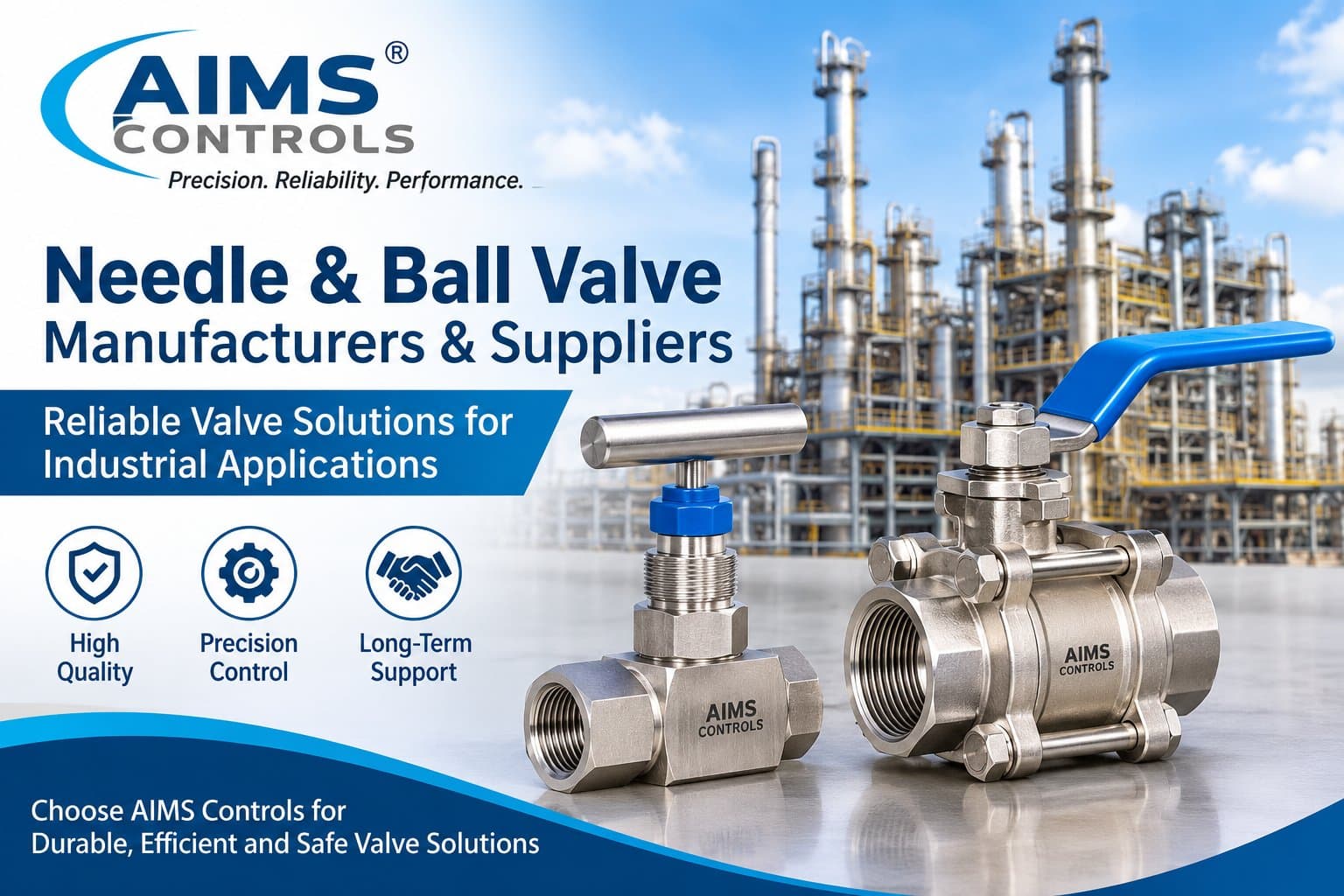
How to Select the Right Needle and Ball Valves for Industrial Applications Industrial processes depend on reliable flow control. Whether a facility operates in oil and gas, chemical processing, power generation, pharmaceuticals, or manufacturing, selecting suitable valves is essential for safe and efficient operations. Among the commonly used instrumentation components, needle valves and ball valves play important roles. Although both help control fluid flow, they are designed for different operating requirements. Understanding these differences can help engineers, maintenance teams, and purchasing professionals make better decisions. Understanding Needle Valves Needle valves are designed for precise flow adjustment. Their needle-shaped stem allows gradual changes in the flow passage, making them useful in applications where controlled flow regulation is required. They are commonly considered for: Instrumentation and sampling lines Pressure measurement systems Process control applications Fluid and gas regulation Testing and calibration arrangements When selecting a needle valve, consider the operating pressure, temperature, fluid compatibility, connection type, and required flow characteristics. Understanding Ball Valves Ball valves use a rotating ball with a bore to control the flow of liquids or gases. A quarter-turn operation generally moves the valve between open and closed positions, making ball valves suitable for applications that require convenient shut-off. Depending on the system design, available configurations may include two-way, three-way, and other multi-way arrangements. Ball valves are commonly considered for: Industrial fluid handling systems Pipeline isolation Process equipment Utility lines Applications requiring quick shut-off The correct configuration and material should always be selected according to the actual operating conditions. Needle Valve vs. Ball Valve: What's the Difference? Feature Needle Valve Ball Valve Main purpose Precise flow adjustment Flow shut-off and control Operating mechanism Needle-shaped stem Rotating ball Operation Gradual adjustment Typically quarter-turn Common application Instrumentation lines Isolation and process lines Selection priority Flow regulation requirements Shut-off and configuration requirements The right choice depends on the function the valve needs to perform. A needle valve is not automatically a replacement for a ball valve, and vice versa. Five Important Factors Before Choosing an Industrial Valve 1. Operating Pressure and Temperature Check the expected operating conditions and ensure that the selected valve is suitable for the system's pressure and temperature requirements. 2. Material Compatibility Valve body and internal material selection should account for the process fluid, corrosion risk, and operating environment. Stainless steel, brass, and alloy options may be considered depending on the application. 3. Connection Type Confirm that the valve connection matches the existing instrumentation or pipeline arrangement. Incorrect connections can create installation and maintenance difficulties. 4. Valve Configuration Consider whether the application needs a needle valve, two-way ball valve, three-way ball valve, or another configuration. The choice should reflect the intended flow path and operating function. 5. Supplier Experience and Technical Support Look for a supplier that can provide relevant product information, technical guidance, and support in identifying a suitable valve for the application. Why Choosing the Right Supplier Matters Industrial valve selection involves more than comparing product prices. Buyers should evaluate product suitability, material options, application requirements, documentation, and after-sales support. AIMS Controls, the official trademark of PI Controls Instruments Pvt. Ltd., provides industrial instrumentation and process control solutions. Its product range includes needle valves, ball valves, valve and manifold assemblies, pressure instruments, temperature instruments, transmitters, and instrumentation fittings. Businesses looking for Needle & Ball Valve Manufacturers & Suppliers can explore the product range and available technical information on the official website: https://www.aimscontrols.com/needle-ball-valve-manufacturers-suppliers/ Final Thoughts Needle valves and ball valves serve different purposes in industrial systems. Needle valves are useful where controlled flow adjustment is required, while ball valves are commonly selected for convenient flow shut-off. Before purchasing, evaluate the application, operating conditions, material compatibility, connection requirements, and supplier support. A well-informed selection can help improve system suitability and simplify long-term maintenance planning.
https://www.aimscontrols.com/needle-ball-valve-manufacturers-suppliers/